Operation SUNBURN - Part One
Over recent months and years, there has been lots reported about illegal immigrants & Britain’s efforts to try and control their arrival as well as news covering the troubles in Palestine and Israel.

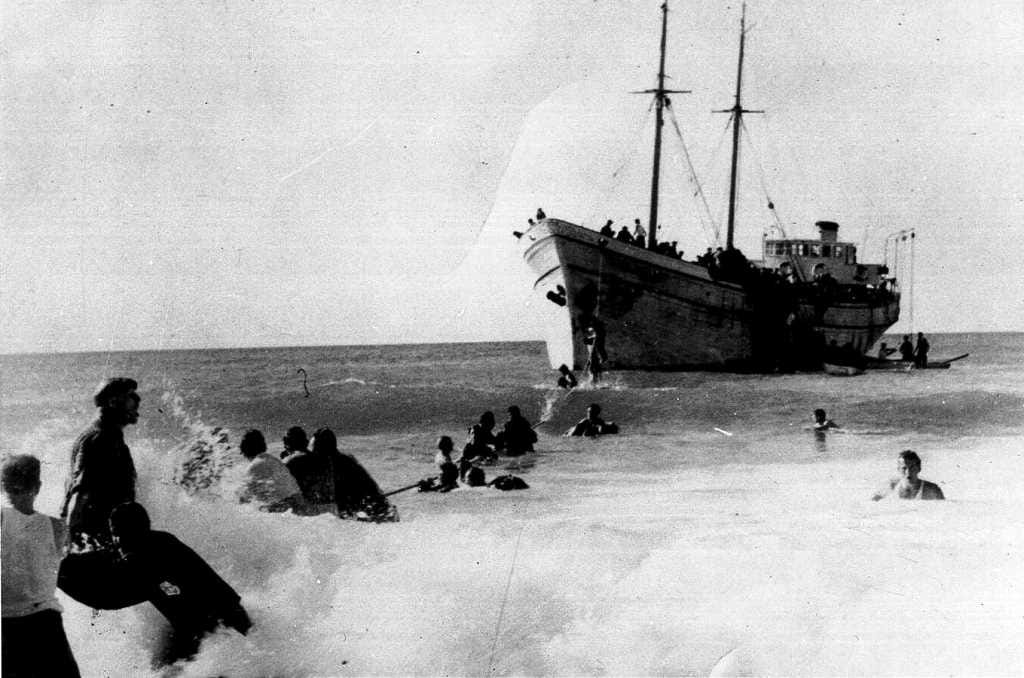
However, this is nothing new. At the end of the Second World War, Britain was fighting an immigration battle, trying to stem the flow of illegal immigrants, but not coming across the channel from France to Britain, but in Palestine.
In this article, I look at how the Royal Air Force was subjected to terrorist attacks in Palestine in revenge for its role in policing the illegal immigrants trying to enter the country whilst trying to cope with the mass demob and retirement of aircraft post WW2, and the mutinies of 1946.
In 1945, many European governments were having to cope with an influx of vast numbers of Jewish Refugees arriving in their countries, many of whom were survivors of the Holocaust. Unfortunately, antisemitism was still widespread in many countries and the option of encouraging displaced Jews to emigrate to Palestine had significant appeal.
The League of Nations had given the administration of Palestine to Britain and maintaining this migration meant that the number of Jewish immigrants had to be imposed, putting Britain in a difficult situation. British forces, especially the Royal Air Force, were heavily involved in the search for ships bringing illegal refugees into Palestine.
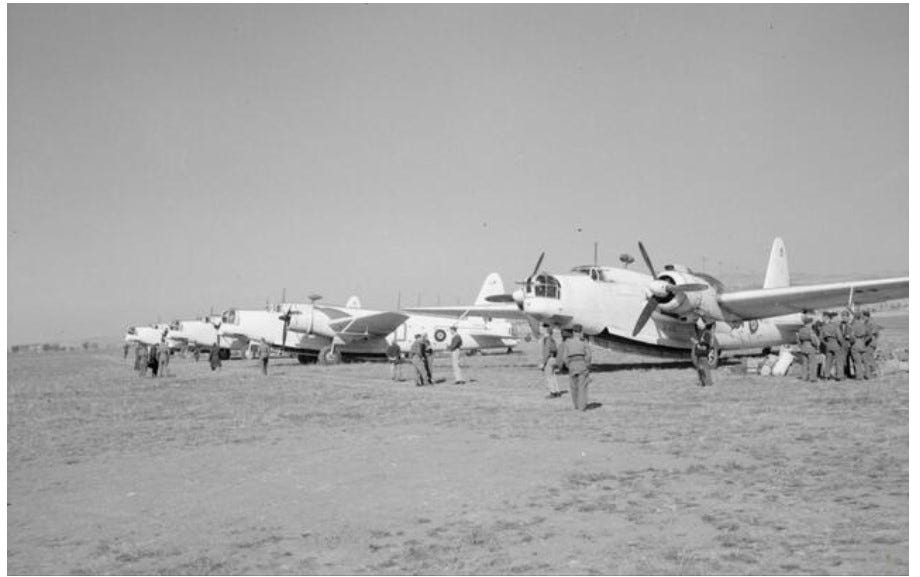
Following the end of World War Two, No 221 Squadron equipped with the Wellington were the only maritime assets available to provide air sea rescue cover over the Eastern Mediterranean from their base at RAF Idku in Egypt. Consequently, they provided a detachment of aircraft that would be based at RAF Aqir in Palestine.
However, when the Squadron disbanded on 25th August 1945, the RAF was left with no suitable aircraft to provide long range maritime reconnaissance in support of the Royal Navy.
It was because of this, and that RAF Lydda was the main transit airfield on the Transport Command trunk route to the Far East that the lack of air sea rescue cover was deemed unacceptable. When No 621 Sqn based at RAF Mersa Matruh in Egypt re-equipped with the Vickers Warwick Mk.V, the decision was taken to operate a detachment of four aircraft from RAF Aqir in Palestine but this move didn’t take place until December 1945.
Prior to 621 Sqn being declared operational, the maritime cover for Operation SUNBURN was tasked to 148 Sqn with their Liberator aircraft operating from RAF Gianaclis in Egypt. The first SUNBURN sortie for the Sqn took place on 21st November 1945 when 2 aircraft took part but made no significant sightings of shipping carrying illegal immigrants to Palestine. The lack of sightings was not surprising as the Liberators were not equipped with specialist sea search radars and had to rely on the crews Mk 1 eyeball!
Following 621 Sqn being declared operational, their first Op SUNBURN sortie took place on 24th December 1945 when Fg Off Millett and his crew took off at 06:05Hrs in Warwick LM840 to locate a small patrol vessel in search area “HOW”. W/O Chapman and crew also got airborne at 07:55Hrs in Warwick LM843 to search area “DOG”.
Millett returned to base landing at 11:30hrs declaring the aircraft unserviceable due to engine oil temperature overheating but reported a possible sighting of a suspect vessel at position 3340N 3347E.
At 14:48hrs, LM840 was airborne again and heading towards the reported sighting, this time with Flt Lt Brown and crew. They spotted the suspect ship, identified and photographed it before returning to base at last light, landing at 17:45hrs. This became the ‘norm’ for 621 Sqn.
In November 1945, the RAF unit at Ras El Ain near Lydda came under attack when a group of seven or eight Jewish men ‘bluffed’ their way into the RAF unit in two civilian lorries.
On arrival at the camp entrance, the occupants of the lorries who were said to be wearing RAF uniforms, produced documentation and passes containing official RAF stamps, gained entrance to the site, and after tying up fifteen guards, they got away with arms and ammunition.
This wasn’t the only incident of this nature. On 28th January, a similar raid took place at RAF Aqir, the home of the Airborne Parachute Training School, when 15 men dressed in RAF uniform ‘coolly’ walked onto camp during lunch hour and headed for the firearms store where they got away with 600 sten & maxim machine guns.
On arrival, they asked a Jewish worker where the keys were and when he refused to tell them, he was knocked unconscious. Upon gaining access to the store, they found four airmen who they bound and gagged before forcing five Arab civilians to load the weapons onto a lorry.
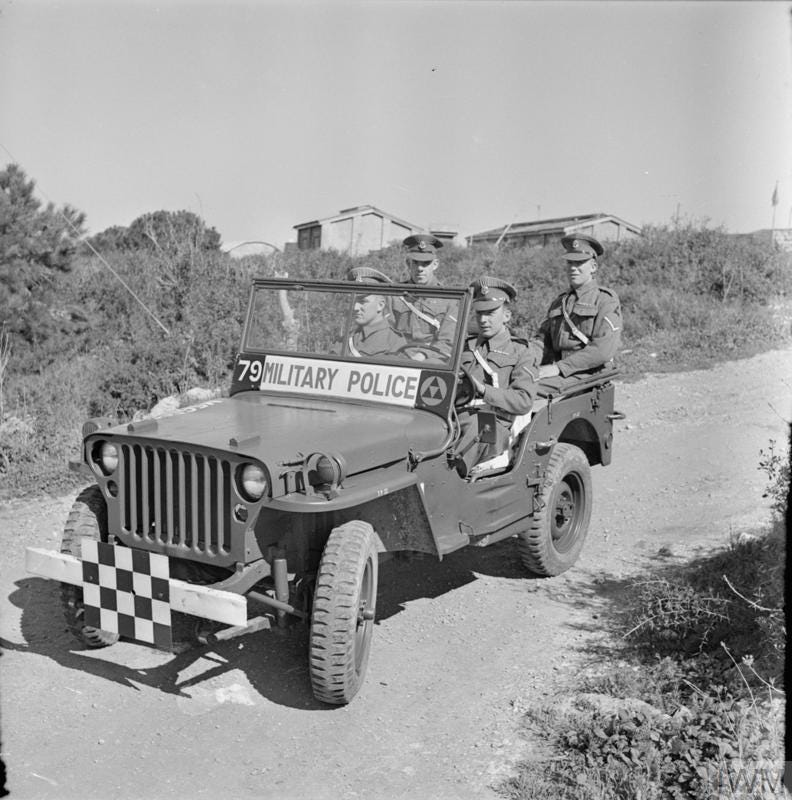
When the duty Sergeant returned from lunch, he found his bound colleagues and sounded the alarm. The Military Police quickly initiated a widespread search for the terrorists and found one of the lorries and recovered the 600 machine guns.
Despite the best efforts of the British Forces in trying to control the illegal migration, hundreds still arrived, and false propaganda wasn’t helping the situation. In December 1945, the underground radio station “Voice for Israel” claimed that the latest batch of illegal immigrants had been smuggled into the country within half a mile of a large military camp despite the vigilance of Britain’s strong Naval and Air Forces.
Naturally, the British hit back at the false claims saying they were untrue and published the ‘true’ facts.
The Radar Station on Mount Carmel in the Sharon Plain picked up the first plot of the refugee ship when it was four days out at sea. From then on, the ships course was continuously mapped until its arrival off Naharia, north of Haifa.
Three days out, RAF Spitfires were despatched from their base in Palestine on reconnaissance sorties when they sent back radio messages reporting the ships position and course. RAF aircraft subsequently kept a watchful eye on the ships journey towards the coast.
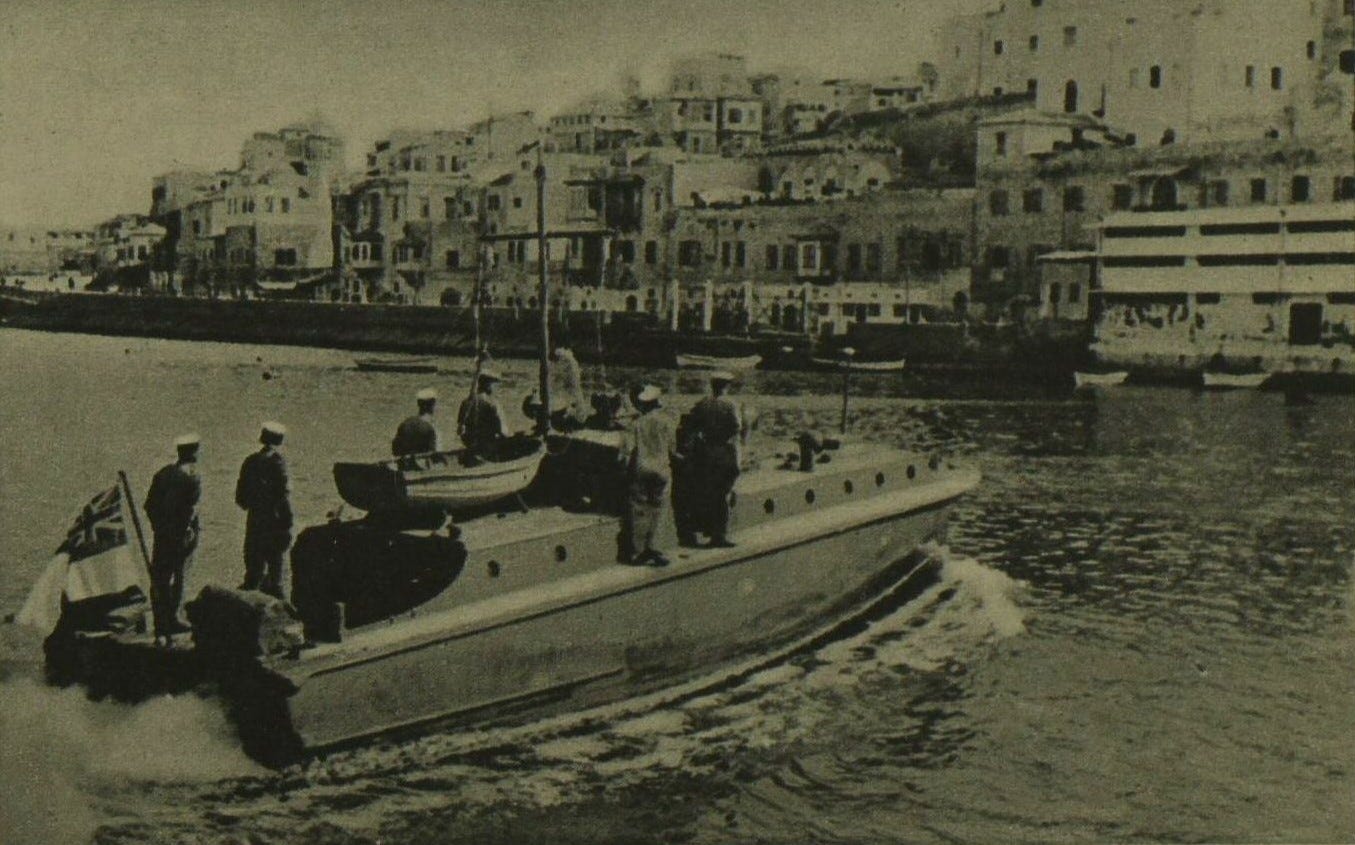
Naval high-speed launches and corvettes were ordered out from Haifa harbour, and “escorted” the ship on the latter part of its journey to the coast but they made no attempt to stop the ship. No warning shots were fired across her bows and no boarding parties were sent to take the passengers into custody.
When Police coastguards sighted the ship entering territorial waters, they signalled to their headquarters but received no instructions to stop the ship and prevent refugee landings.
A special motor launch provided by the Jewish underground force, Haganah, was allowed to shuttle between the refugee ship and the shore bringing parties of illegal refugees ashore.
Apparently, in this latest batch of refugees arriving illegally, there were Jews from Auschwitz in Poland. In the previous landings from the ship Demetrious, there were survivors from Belsen and Buchenwald.
On Boxing Day 1945, 250 illegal immigrants got ashore near Acre. Their small vessel ran aground on a reef after being forced to alter its course. The boat was named after a Palestinian girl “Hannah Szenes”.
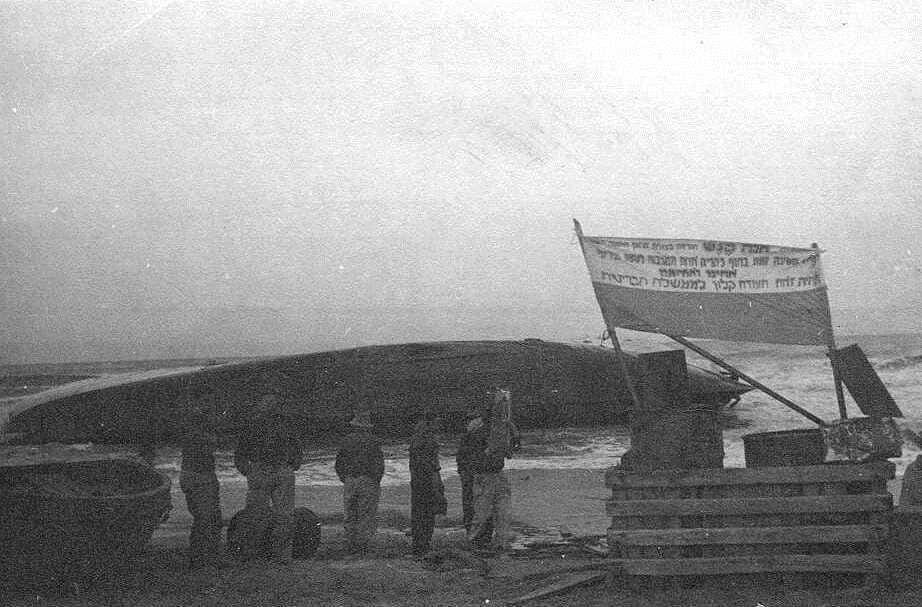
Hannah Szenes was one of the Jewish Special Operations Executive (SOE) recruits from Mandate Palestine.
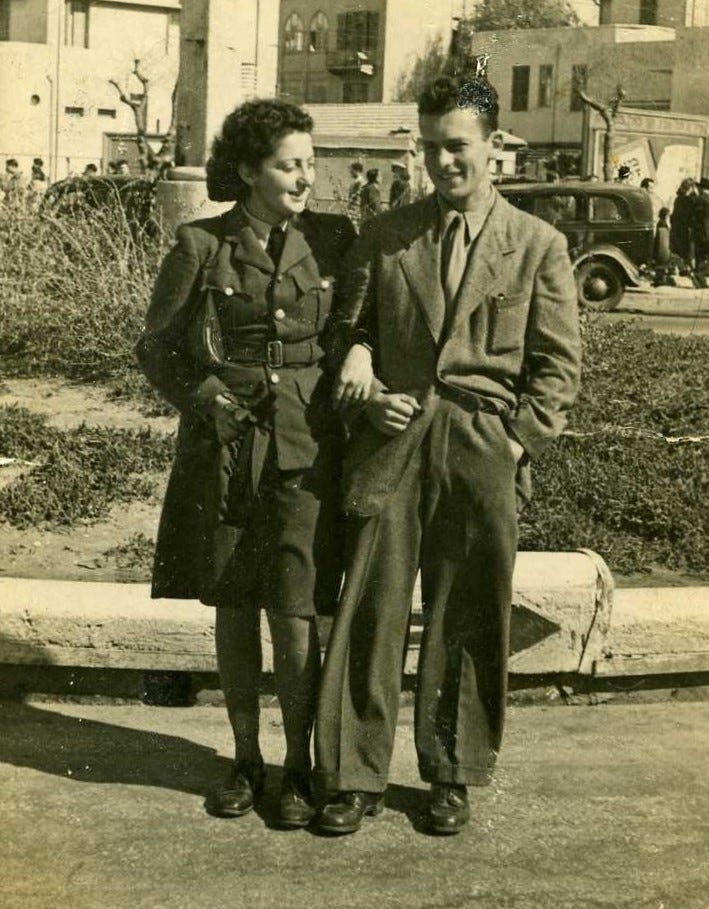
Before joining the SOE & MI9, Hannah served as an Aircraftwomen 2nd Class in the Women’s Auxiliary Air Force. She was parachuted into Hungary by the RAF and later captured by the Germans and executed on the 7th November 1944 aged 23.
Near the shipwreck, a Zionist flag was found which bore the inscription “The Hannah Szennes has landed Jewish immigrants with the help of Haganah”. A few hours later, the secret radio station “Voice for Israel” came on air with a boastful report of the success of the operation and stated “Let the vessel be a memorial to the 6,000,000 of our brothers and sisters who fell in Europe”.
HistoryFare Substack is reader-supported. To receive new posts and support my work, please consider becoming a free or paid subscriber.